
How to prevent sweaty hands and toughen up your skin for climbing and bouldering
Compartir
If you're a climber, you know your hands are your primary tool. Excessive sweating and overly soft skin can ruin a session, cause you to lose grip, and increase the risk of injury. In this blog, we'll share the best strategies to control hand moisture and strengthen your skin, allowing you to climb with more confidence and durability.
1. Avoid excessive hand sweat
Sweat is one of a climber's biggest enemies. It affects friction and reduces grip, especially on small holds or crimps. Additionally, when hands sweat too much, the skin on the fingertips wears down quickly, leaving pink or purple areas that reduce sensitivity and grip. To control it:
- Use quality chalk: Opt for block or liquid chalk if you have very sweaty hands. Liquid chalk can help dry the skin before applying powdered or block chalk for better performance. At 7A+, we are working to bring incredible and pure chalk to our store.
- Try hand antiperspirants: Some climbers use products like Perspirex, Dry Hands, or Antihydral to reduce sweating. You need to be careful and aware of how much your hands sweat to apply the optimal amount and avoid cracking problems. Apply it 30 minutes before your session.
- Do shorter sessions and quality attempts: Instead of long training sessions with many attempts on abrasive blocks, prioritize fewer but well-executed attempts to reduce excessive skin wear.
- Tape your fingers: Once you feel your skin starting to bother you, it's time to tape your fingers to get those last few attempts in without rubbing the skin and completely wearing it down. It's all about getting used to climbing with tape, being aware of the loss of sensitivity but gaining more attempts and preventing continuous sweat from softening the skin.
2. Toughen your skin to prevent tears and improve grip
Having tough but not too thick skin is key to preventing injuries and improving grip. Follow these tips:
-
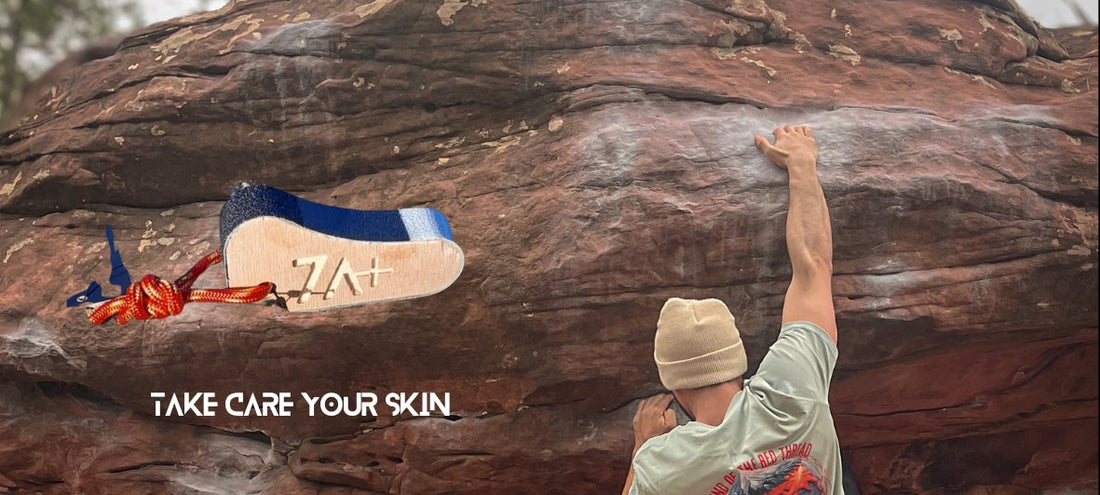
File your calluses regularly: Irregularities in the skin can cause calluses to snag and tear. Use a special climber's file, like our 7A+ 3G Climbing, Bouldering, and Routes Files designed to keep skin even without removing natural protection.
- The straight part is ideal for fingers.
- The tight curves are used to treat palm calluses with a more aggressive file thickness.
- The wide curve is perfect for filing nails.
- Apply helpful creams: Beeswax, Benzoin tincture helps toughen skin and prevent injuries. Apply it before and during the session as many times as necessary, and even after the session to aid in reducing inflammation and regeneration.
- Expose yourself progressively: Don't try to increase your climbing volume all at once. Your skin needs time to adapt.
3. Take care of your hands after each session
Post-workout care is also important:
- Clean your hands thoroughly: Wash with water and mild soap to remove chalk residue.
- File any irregularities: Before cracks or hard calluses form, use the 7A+ 3G Climbing, Bouldering, and Routes Files to keep your skin in optimal condition.
- Apply a restorative treatment: Use a regenerating cream, apply it every night before going to bed, use a generous amount so it penetrates overnight.
Conclusion
Well-cared-for hands make all the difference in your climbing performance and comfort. By following these tips, you'll avoid excessive sweat and achieve tough yet flexible skin. And remember, an essential tool in your climbing kit is our 7A+ 3G Climbing, Bouldering, and Routes Files, designed to keep your hands ready for the next send.


